A Zero-Sugar Jeera Soda Sold 250,000 Cans in Two Months — Then Nearly Ran Out of Cash
CNN Foods' Phirki Zero became a quick-commerce breakout almost overnight. Founder Chirag Wadhwa's own account of what happened next is a more honest startup story than the sales numbers alone
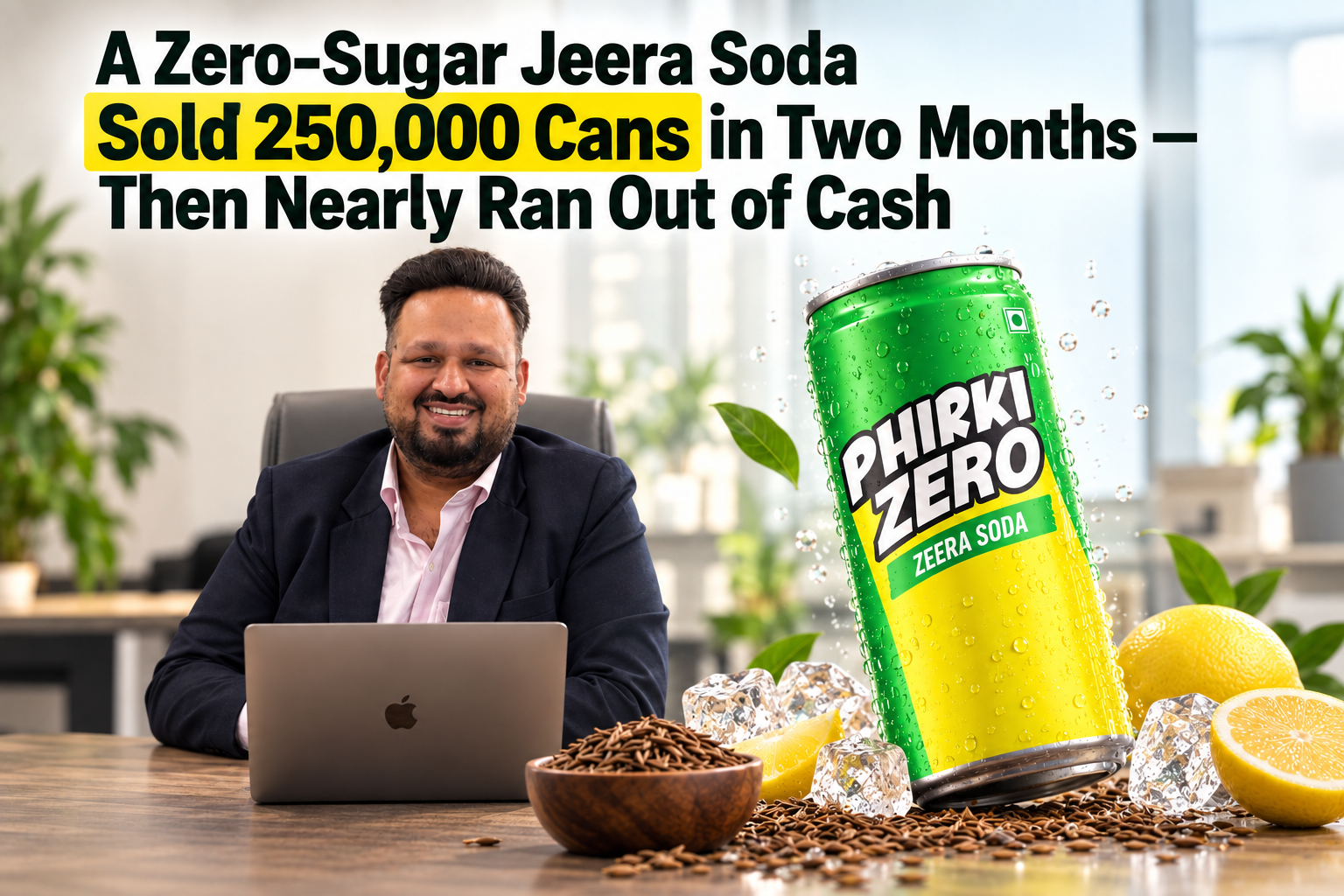
Chirag Wadhwa founded Delhi-based CNN Foods in 2024 with a specific bet: India's most nostalgic regional flavours, reformulated into modern, health-conscious formats, could compete with global beverage brands rather than simply imitate them. His flagship product, Phirki Zero, launched in March 2026 as what the company calls India's first zero-calorie, zero-sugar, zero-caffeine jeera masala soda — built with real lemon, aimed at recreating the classic Indian jeera soda experience without the sugar and calories that usually come with it.
The Numbers That Made It a Breakout
The traction was immediate and unusually steep for a new FMCG brand. Phirki Zero sold roughly 250,000 cans in its first two months on the market, with around 80 percent of those sales coming through quick commerce platforms rather than traditional retail. Wadhwa has described the product's rollout on Swiggy Instamart in granular detail: within 15 days, Phirki Zero expanded to nearly 98 percent of the dark store universe across Bangalore, Mumbai and several other cities, driven entirely by strong daily repeat purchases rather than promotional pushes — at one point trending on the platform in Delhi with, in his words, no hacks, no shortcuts, just product, repeat purchase behaviour and execution. The brand has since expanded across Blinkit, Zepto and Swiggy Instamart, alongside modern trade and kirana outlets, and added a second product, Papa Nata, a fruit drink combined with coconut jelly.
The Part Most Founders Don't Post About
What makes CNN Foods' story genuinely instructive is what Wadhwa chose to share alongside the good numbers. In a candid LinkedIn post, he revealed that the same month Phirki Zero sold close to 50,000 cans — a real achievement for a ₹60 zero-calorie soda competing against ₹10 legacy products — the company nearly ran out of cash. One of its largest quick commerce partners hadn't released payouts for over 45 days, even as the platform continued expecting CNN Foods to keep spending on advertising to sustain sales momentum. Wadhwa laid out the choices bluntly: cut marketing and risk losing momentum, delay a payment, negotiate harder with suppliers, or put more of his own money into the business. He did everything except cut marketing.
His stated takeaway from the experience was equally direct: revenue is an opinion, cash flow is reality — a lesson that quick-commerce-first consumer brands, however strong their sales numbers look, are learning the hard way as platform payout timelines become as important to survival as product-market fit.
A Bigger Ambition Than a Single Product
Wadhwa has framed CNN Foods' mission in explicitly nationalistic terms: for decades, he's argued, India has exported ingredients and manufacturing capacity to global beverage brands, and the next chapter should be exporting Indian-origin brands, innovation and culture directly — building products that can sit on a shelf anywhere in the world and win on genuine product innovation, not on being the cheaper option.
Why It Matters for Startup Spotlight
CNN Foods' story is a useful corrective to how quick commerce success usually gets reported — as a clean sales-velocity number, without the working-capital strain that often accompanies it. A brand can sell out its category on Blinkit and Zepto and still face a genuine cash crunch because of how slowly platform payouts move relative to how fast marketing spend is expected to keep pace. For founders building consumer brands inside India's quick commerce boom, Wadhwa's candour is arguably more useful than the 250,000-can headline: growth and solvency are not the same milestone, and hitting one doesn't guarantee the other.
Featured Startups
At www.elevatexstudios.com / ElevateX Studios, Featured Startups, part of our Startup Spotlight coverage, highlights the Indian companies hitting real milestones — funding, product traction, or scale — and the founders behind them.